Damascus Farm Pickup is by appointment only • Please call ahead: (503) 799-7981
Bee Way Honey Pollination
Bee Way Honey Pollination Damascus, Oregon • Est. 1993
Home • Educational Guide • Pacific Northwest Apiary

The Oregon Raw Honey Buying Guide

What "raw" really means, the science behind local honey and seasonal allergies, and how to identify unadulterated Pacific Northwest honey.

Published by Bee Way Honey Pollination • Damascus, Oregon • 33 Years of Natural Beekeeping
Chapter 01

What Truly Makes Honey "Raw"?

Walk into any conventional grocery aisle and nearly every bottle claims to be "pure," "natural," or "clover." Yet behind commercial labels lies an industrial manufacturing process that strips honey of its live biological properties. To understand real honey, you must understand the difference between commercial processing and traditional apiary extraction.

1. The Heat Threshold (< 105°F)

Inside an active beehive, the colony maintains the brood nest and honey supers between 93°F and 97°F (34°C – 36°C) through collective fanning and muscular shivering. True raw honey is extracted at or below these natural temperatures.

Commercial packers routinely heat honey to 160°F (71°C) or higher to liquefy it rapidly for high-speed automated bottling and to kill wild yeasts. This pasteurization permanently denatures fragile proteins and destroys living enzymes:

  • Diastase (Amylase): Converts starches into simple sugars. Sensitive to heat degradation above 104°F.
  • Invertase (Sucrase): Breaks down sucrose into glucose and fructose, stabilizing the honey's structure.
  • Glucose Oxidase: Produces natural trace amounts of hydrogen peroxide, providing raw honey's intrinsic antimicrobial barrier.

2. Gravity Straining vs. Ultra-Filtration

In a traditional apiary like Bee Way, harvested combs are uncapped, spun in a centrifugal extractor, and allowed to settle naturally by gravity. The honey passes only through coarse stainless steel strainers to catch stray beeswax cappings.

Industrial honey processors use high-pressure micro-filtration through diatomaceous earth. This serves two commercial goals:

  • Indefinite Shelf Clarity: Stripping out microscopic pollen grains removes the natural nucleation points that cause honey to crystallize.
  • Origin Concealment: Pollen analysis (melissopalynology) is the definitive forensic test to verify country of origin. Ultra-filtering strips the pollen fingerprint, enabling packers to blend cheap imported syrups without geographical traceability.
Characteristic Bee Way Pure Raw Honey Industrial Supermarket Honey
Maximum Temperature Never heated above hive temperature (< 100°F) Heated to 160°F – 180°F (Pasteurized)
Filtration Method Gravity settled & coarse mesh strained High-pressure micro-filtered (diatomaceous earth)
Natural Pollen Grains 100% Intact & biologically present Completely removed by industrial filters
Live Enzymes Active diastase, invertase, and glucose oxidase Permanently denatured by heat
Natural Crystallization Crystallizes naturally over time (proof of purity) Chemically or mechanically halted
Aroma & Terpenes Vibrant floral aromas reflecting PNW blooms Dull, generic flat sweetness
Chapter 02

Local Honey & Seasonal Allergies: What Science Says

One of the primary reasons residents across the Portland metropolitan area and the Willamette Valley visit local apiaries is the belief that eating raw honey harvested near where they live will protect them from seasonal allergies. This tradition has deep historical roots, but what do clinical trials, medical literature, and botanical science actually show?

The Immunological Concept: Oral Immunotherapy

The premise behind using local honey for allergies mirrors Oral Immunotherapy (OIT), the clinical practice of administering micro-doses of an allergen to desensitize the patient over time:

  • Foraging honeybees collect nectar from regional flowers, inadvertently coating their bodies with microscopic grains of local pollen.
  • In raw, unpasteurized honey, these pollen grains remain preserved.
  • By consuming small amounts of local raw honey daily over months leading up to spring, the digestive tract and mucosal immune system are exposed to minute quantities of local botanical antigens.
  • The goal of oral immunotherapy is to shift the immune response from an IgE histamine-mediated allergic reaction toward regulatory T-cell tolerance.

What Clinical Research Has Documented

Annals of Allergy (2002)

The Rajan Double-Blind Trial

Conducted at the University of Connecticut, this randomized, double-blind trial compared participants consuming local unpasteurized honey, commercial national honey, or honey-flavored corn syrup placebo.

Finding: Neither honey group demonstrated statistically significant relief over the corn syrup placebo for general hay fever.
Int. Archives of Allergy (2011)

The Saarinen Birch Pollen Trial

Tested patients with diagnosed birch pollen allergies who ingested birch pollen-enriched honey prior to birch season, compared against regular honey and a control group without honey.

Finding: Patients taking birch-pollen honey reported a 60% lower total symptom score and 50% fewer days with severe symptoms during peak pollen season.
Complementary Ther. Med. (2013)

The Asha'ari High-Dose Trial

Evaluated the effect of daily high-dose honey consumption (1g per kg body weight) alongside standard antihistamines over eight weeks versus antihistamines alone for persistent allergic rhinitis.

Finding: Participants consuming daily honey showed significant, progressive improvement in rhinitis symptoms that persisted for four weeks after the trial ended.

The Botanical Reality: Wind vs. Insect Pollen

Why do medical allergists remain cautious about claiming local honey treats allergies? The primary reason is botanical:

Wind-Pollinated (Anemophilous)

90% to 95% of seasonal allergic rhinitis (itchy eyes, sneezing, runny nose) is triggered by light, buoyant, airborne pollen from wind-pollinated trees (red alder, birch, oak, hazelnut), tall meadow grasses (ryegrass, fescue), and weeds. These plants do not produce showy flowers or nectar.

Insect-Pollinated (Entomophilous)

Honeybees seek out nectar-rich, colorful flowering plants (clover, wild blackberry, apple blossoms, meadowfoam). Their pollen is heavy, sticky, and nutrient-dense, designed to adhere to a bee's hairs rather than drift through the air into human respiratory passages.

The Beekeeper's Observation: While bees prefer flowering plants, during early Pacific Northwest spring when floral nectar sources are sparse, bees will eagerly collect protein-rich pollen from tree catkins (alder, maple, hazel). As a result, unfiltered raw spring honey frequently contains microscopic trace samples of regional tree pollen.

An Honest, Grounded Perspective

Raw local honey is an unadulterated, whole agricultural food, not an FDA-approved drug or medical cure for allergic rhinitis. However, choosing raw honey harvested within 50 miles of your home guarantees you are consuming pure, unpasteurized honey rich in regional floral bioflavonoids, natural antioxidants, live enzymes, and propolis resins that industrial commercial jars cannot replicate.

Chapter 03

Pacific Northwest Floral Varietals

Honey is an expression of landscape and season. The color, aroma, and crystallization speed of raw honey are determined entirely by the floral nectar sources available to the bees. At Bee Way, our colonies forage across the Willamette Valley, Clackamas County meadows, and Oregon berry fields, producing three primary single-origin and regional varietals:

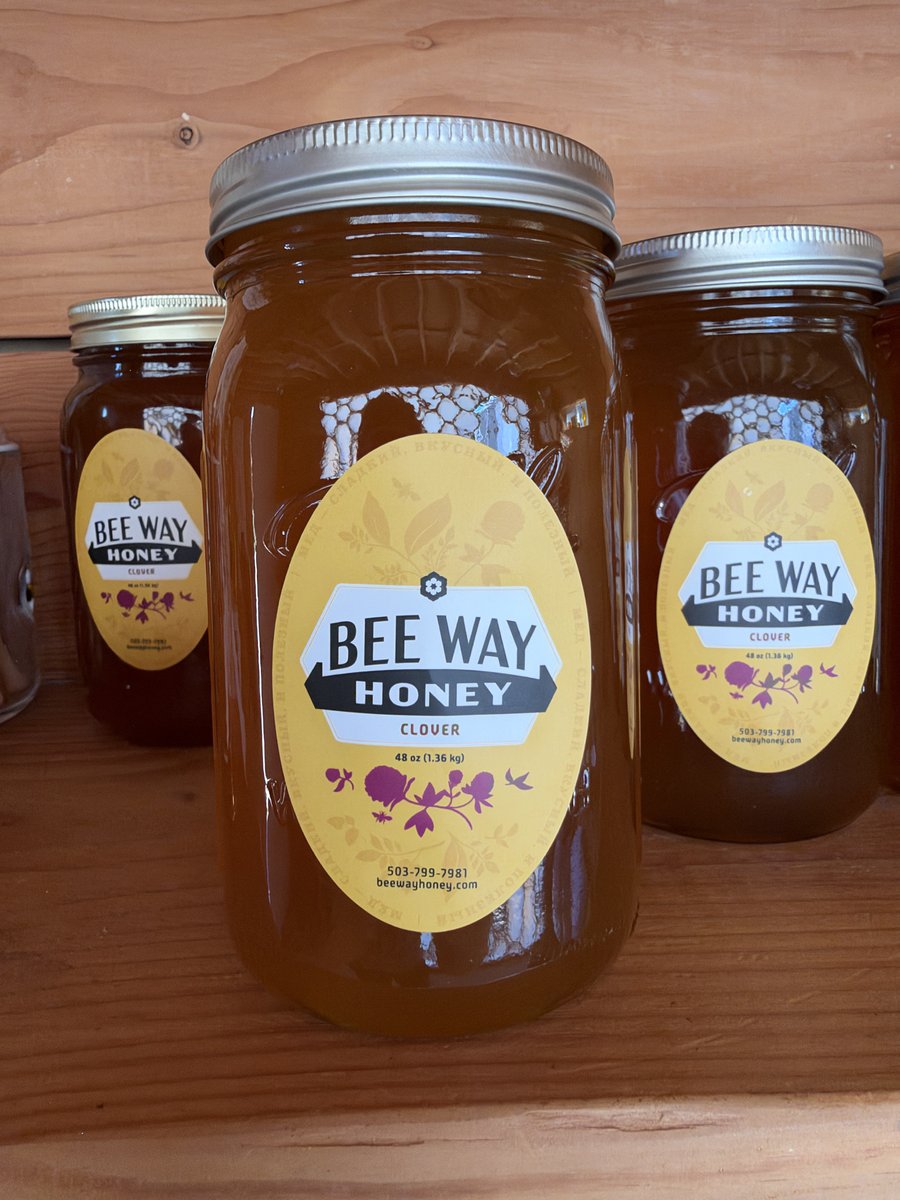
Pure Raw Clover Honey
Single-Source Blossom

Raw Clover Honey

Color: Pale water-white to light golden

Flavor Profile: Mild, delicate sweetness with a clean, buttery finish

Aroma: Fresh cut grass and subtle vanilla floral notes

The classic daily table honey. Its mild flavor sweetens tea, oatmeal, and yogurt without overpowering other ingredients. Preferred by families with young children and bakers looking for subtle sweetness.

Crystallization Rate: Medium (Smooth, fine crystals)
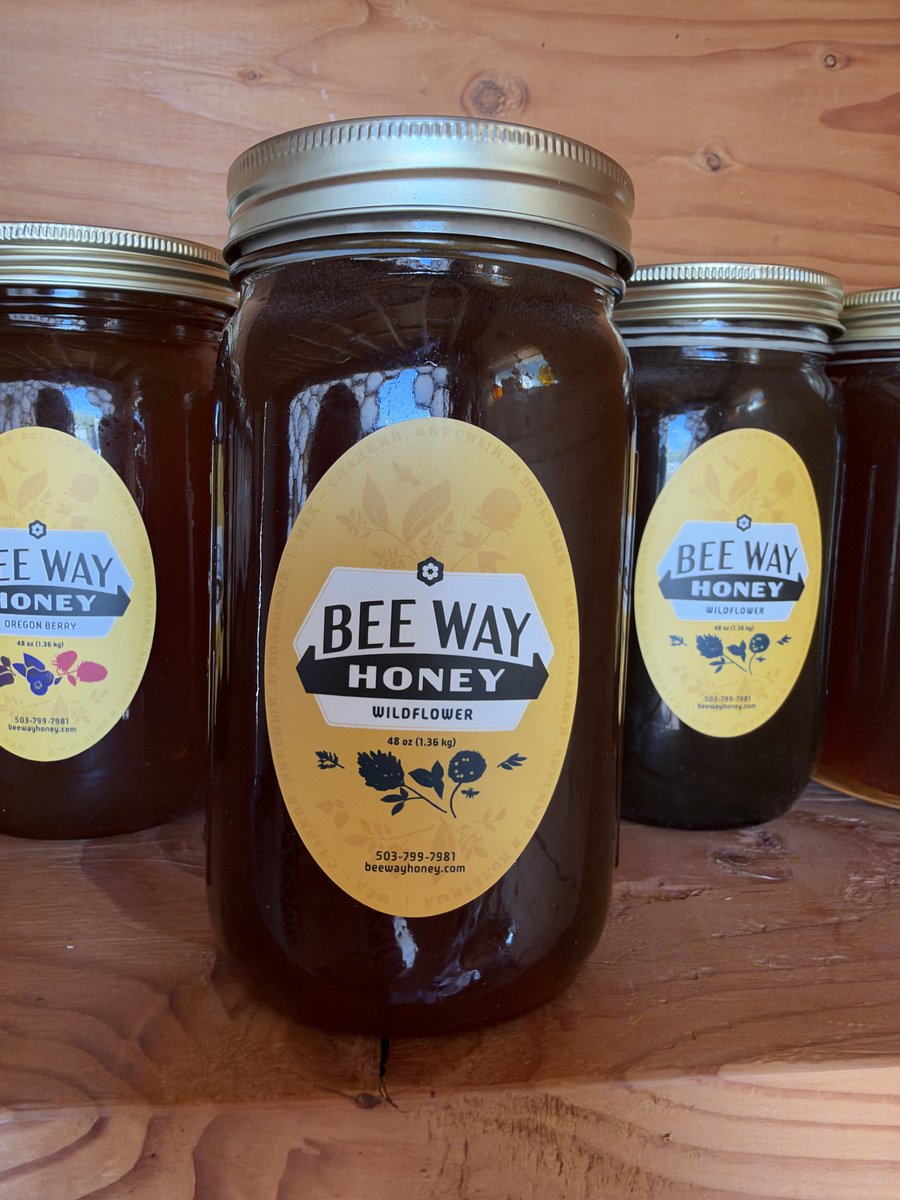
Pure Raw Wildflower Honey
Multi-Floral Harvest

Raw Wildflower Honey

Color: Warm medium amber

Flavor Profile: Rich, complex, layered floral notes that evolve with the season

Aroma: Earthy, herbal, and deeply botanical

A multi-floral polyfloral honey gathered from Damascus and Clackamas County wildflowers, fruit blooms, and native pasture plants. Because bees visit diverse blossoms throughout summer, every seasonal harvest carries a unique floral signature.

Crystallization Rate: Moderate to slow
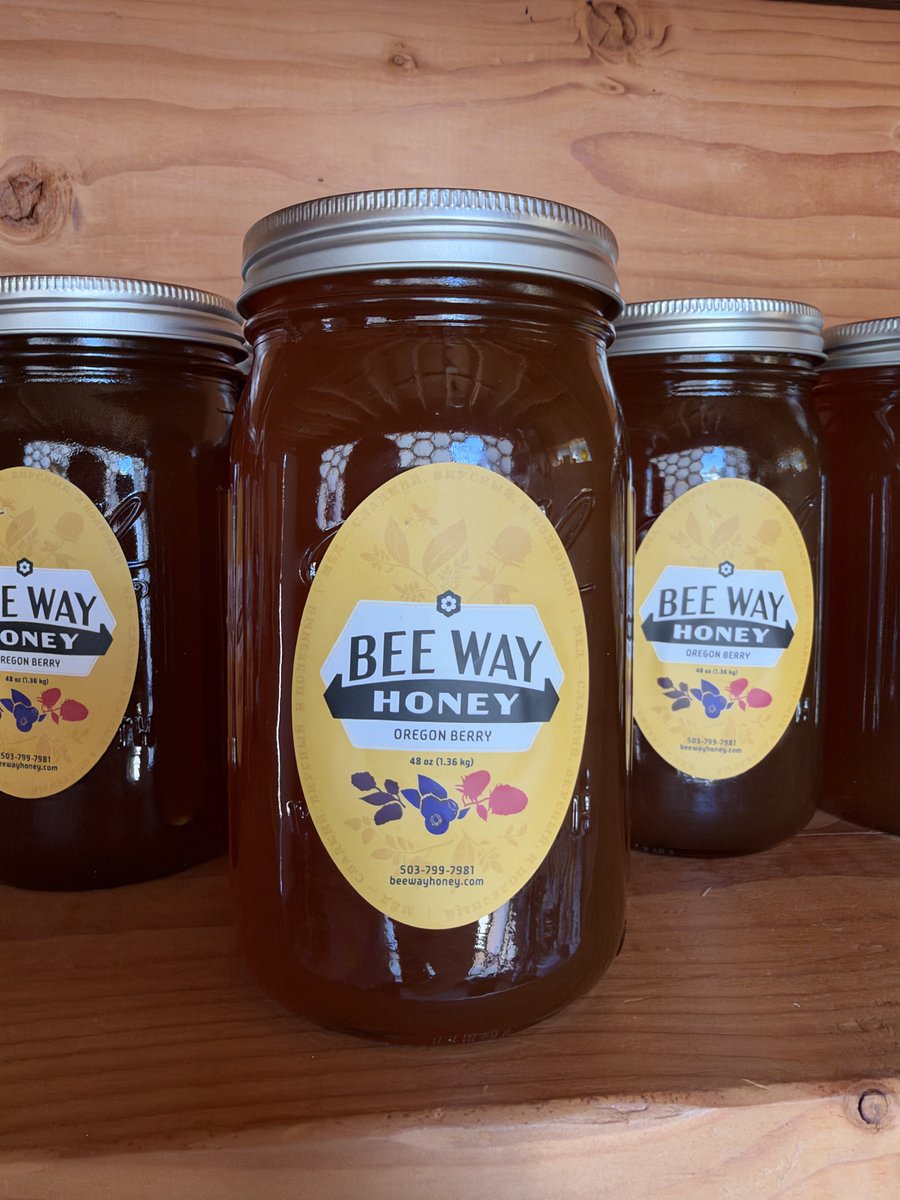
Pure Raw Berry Blossom Honey
Pacific Northwest Signature

Raw Berry Blossom Honey

Color: Deep rich amber to dark copper

Flavor Profile: Bold, full-bodied with subtle tart berry undertones and molasses richness

Aroma: Jammy, warm fruit and toasted caramel

Harvested directly from our Willamette Valley pollination placements in commercial Marionberry, raspberry, and wild Himalayan blackberry fields. Prized by artisan bakers, craft mead makers, and barbecue glazes for its robust depth.

Crystallization Rate: Fast to medium (Forms rich, velvety grain)
Chapter 04

Crystallization & Proper Care: Proof of Purity

Few natural phenomena are as misunderstood as honey crystallization. Consumers accustomed to industrial supermarket honey often assume that when honey turns thick, opaque, or grainy, it has "gone bad" or contains added sugar. In reality, the exact opposite is true.

The Chemistry: Why Real Honey Naturally Crystallizes

Honey is a naturally supersaturated sugar solution produced by honeybees. It contains roughly 70% to 80% natural sugars (primarily fructose and glucose) and less than 18% water. Under ordinary thermodynamic conditions, this much sugar cannot remain dissolved in so little liquid indefinitely.

Glucose vs. Fructose Balance

Fructose remains soluble in water at room temperature. Glucose, however, is far less soluble. As glucose naturally separates from the water, it forms microscopic crystal lattices. Honeys higher in glucose (such as Clover and Blackberry) crystallize faster than high-fructose varieties.

Natural Nucleation Points

In unheated, unfiltered raw honey, microscopic pollen grains, propolis particles, and wax micro-flecks act as natural "seed" nuclei where glucose crystals attach and grow. Because industrial processors micro-filter out all pollen, commercial honeys stay unnaturally clear.

How to Gently Reliquefy Raw Honey (Without Damaging Enzymes)

Crystallized honey is 100% edible and many beekeepers prefer it as a spreadable butter on warm sourdough. If you prefer liquid honey for drizzling, follow the beekeeper's gentle water-bath method:

1

Prepare a Warm Bath

Heat a pot of water to warm bath temperature: 95°F to 104°F (35°C – 40°C). Remove the pot from direct stove heat.

2

Rest the Container

Loosen the lid and submerge your glass jar or food-grade tub up to its shoulder. Let it sit in the warm water for 20 to 30 minutes, stirring occasionally with a dry spoon.

3

Cool Naturally

Remove and dry the jar thoroughly before sealing. The gentle warmth dissolves the glucose crystal bonds while preserving every live enzyme and floral aromatic intact.

Never Microwave Raw Honey: Microwaving produces localized hot spots exceeding 200°F within seconds. This permanently destroys the beneficial enzymes (diastase, glucose oxidase) and caramelizes delicate nectar sugars, ruining the honey's original floral character.

Proper Storage Rules for Pure Honey

  • Room Temperature Pantry: Store your honey tightly sealed in a cool, dark kitchen cabinet or pantry (65°F – 75°F).
  • Never Refrigerate: Cold temperatures (around 50°F – 57°F) dramatically accelerate the crystallization rate. Keep honey at room temperature.
  • Keep Moisture Out: Honey is hygroscopic, meaning it absorbs ambient moisture from the air. Always use a clean, completely dry spoon. Water introduced into a jar can dilute the surface and cause wild yeast fermentation.
  • Indefinite Shelf Life: Properly sealed raw honey with less than 18% moisture never spoils. Archaeologists have recovered 3,000-year-old honey pots from Egyptian tombs that remain perfectly edible.
Chapter 05

Visiting Our Damascus Farm Stand

Bee Way Honey Pollination is a family-owned commercial apiary established in 1993. We do not sell through middleman warehouses or mass retail distributors. Customers across Damascus, Clackamas, Happy Valley, Gresham, and greater Portland are welcome to pick up pure raw honey directly at our farm stand by advance appointment.

Bee Way Honey Damascus Stand Approach

Farm Stand Protocol & Details

Physical Address: 17496 SE Hemrich Rd, Damascus, OR 97089

Retail Stand Hours: Monday – Saturday, 9:00 AM – 6:00 PM

Policy: Pickup by advance phone/text appointment only

Payment Accepted: Cash, Venmo, Personal Check

Phone: (503) 799-7981

Common Questions

Frequently Asked Questions About Raw Honey

Direct answers on honey quality, storage, and local sourcing.

What is the difference between raw honey and commercial supermarket honey?

Authentic raw honey is extracted at natural hive temperatures (under 105°F) and gravity-settled, keeping live beneficial enzymes (diastase, invertase, glucose oxidase) and natural pollen grains completely intact. Commercial supermarket honey is routinely pasteurized at 160°F or higher and forced through high-pressure micro-filters, which destroys heat-sensitive enzymes and strips out all natural pollen.

Can eating local honey help reduce seasonal allergies?

The immunological theory of Oral Immunotherapy suggests that consuming trace local pollen in raw honey can help desensitize the immune system to regional allergens over time. Clinical studies present mixed evidence: while a 2002 double-blind study found no significant difference for general hay fever, other international clinical trials observed meaningful symptom reductions when participants consumed local or pollen-enriched raw honey. Because most airborne allergies are triggered by wind-pollinated trees and grasses rather than insect-pollinated flowers, raw honey is not an FDA-approved medical cure, but remains widely valued for its natural bioflavonoids, living enzymes, and regional plant compounds.

What temperature destroys the natural enzymes in raw honey?

Key beneficial honey enzymes begin degrading at temperatures above 104°F (40°C) and are rapidly destroyed when heated above 115°F. Commercial pasteurization at 160°F permanently denatures these proteins.

Why does real raw honey crystallize?

Crystallization is natural proof that honey is 100% pure and unadulterated. Honey is a supersaturated natural solution of glucose and fructose. Over time, natural glucose molecules separate from water and form micro-crystals around microscopic pollen grains. Commercial honeys that have been ultra-filtered to remove all pollen nuclei resist crystallization but lack the nutritional profile of authentic raw honey.

How should I decrystallize raw honey without damaging enzymes?

Place your jar or container into a gentle warm water bath maintained between 95°F and 104°F (35°C – 40°C). Stir periodically until the crystals dissolve. Never microwave raw honey or boil the water, as direct intense heat will destroy its living enzymes and delicate floral aromatics.

Schedule Your Farm Pickup

17496 SE Hemrich Rd, Damascus, OR

Retail Orders & Farm Pickup (503) 799-7981 Call or text ahead to schedule pickup
Wholesale & Commercial Pollination (503) 804-5044 Leonid (Commercial Accounts)
Email Inquiries [email protected]

Farm Pickup Request

Let us know what honey varieties you would like to pick up, and your preferred day and time.